Email Marketing ROI: Why It Still Beats Every Other Channel
Email keeps outperforming newer channels for one unglamorous reason: you own the list, and nobody can take it away.
In short
Email consistently returns more per dollar spent than any other marketing channel, and the reason has nothing to do with clever subject lines. You own the list.
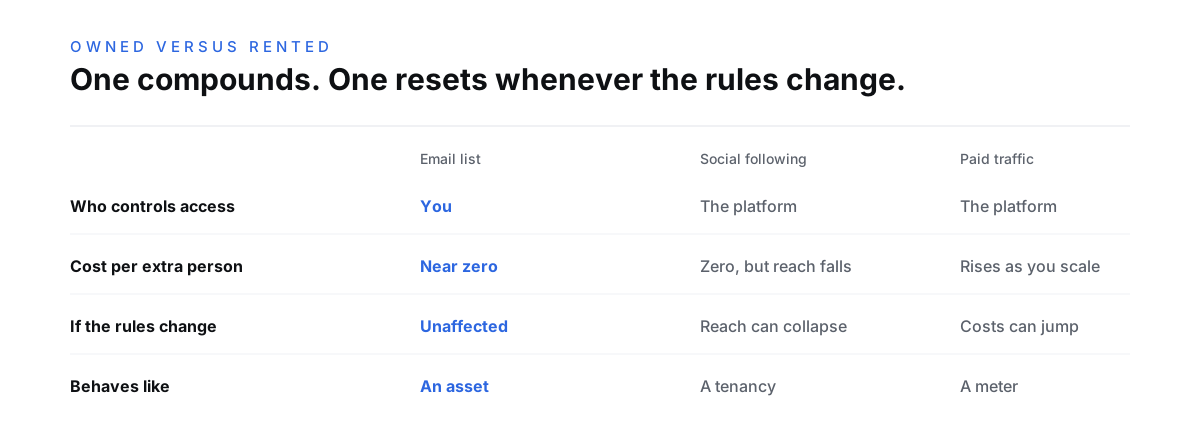
Every other channel rents attention from a platform that can change the rules, raise the price, or throttle your reach without warning. Businesses that built audiences on a social platform and then watched organic reach collapse learned this expensively. An email list is the only audience that travels with you.
The published returns bear this out. In Litmus's email ROI research, 35% of marketing leaders report $10 to $36 back for every dollar spent on email, and another 35% report more than that.
The returns follow from that ownership, not from tactics.
Why the economics work
The cost structure is fundamentally different to paid channels.
Sending to a list of five thousand costs roughly the same as sending to five hundred. The marginal cost of one more recipient is close to zero, which means every additional subscriber improves the ratio permanently rather than adding cost. Paid advertising works the opposite way: reaching more people always costs more, and usually costs more per person as you scale into looser audiences.
The audience is also self-selected. Somebody who gave you their address has already declared interest, which puts them far ahead of anyone you interrupt on a social feed. You are not paying to find interested people, you are talking to people who already identified themselves.
And the list compounds. Subscribers accumulate, and a list built over three years keeps producing without further acquisition spend. Very little else in marketing behaves like an asset.
What actually drives the return
Four things, and only one of them is about writing.
List quality over list size. A thousand engaged subscribers outperform ten thousand indifferent ones on every measure that matters, including deliverability. Large lists full of people who never open are actively harmful, because mailbox providers read that disengagement and start routing you to spam.
Segmentation. Sending everything to everyone is the most common mistake and the easiest to fix. Splitting by what somebody bought, what they clicked, or how recently they engaged routinely produces a step change, because relevance is most of the game.
Automation. Messages triggered by behavior outperform scheduled campaigns substantially, because they arrive when the recipient is already thinking about you. This is where most of the return in a mature program comes from.
Consistency. A list mailed sporadically decays. People forget they subscribed, engagement falls, and deliverability follows it down. Regularity matters more than frequency.
Near-zero
The marginal cost of one more subscriber. It is the whole reason the economics beat every rented channel
What ruins the return
Most underperforming programs are damaged by the same handful of habits.
Buying lists. It is the fastest way to destroy deliverability, it violates the terms of every reputable provider, and in most jurisdictions it is unlawful without consent. The damage extends to your domain reputation, which affects ordinary business email too.
Treating every send as a broadcast. If a subscriber cannot tell why this arrived in their inbox specifically, they disengage. Repeated often enough, that trains providers to filter you.
Only mailing when you want something. A list that hears from you exclusively during promotions learns to ignore you between them, which is most of the time.
Ignoring the unsubscribe rate. People leaving is not the problem. A sudden rise is a signal that something changed, and it is worth investigating rather than absorbing.
Never cleaning the list. Removing people who have not engaged in a year feels like going backwards. It usually improves both deliverability and every percentage you report.
An email list is the only marketing asset you own outright. Everything else is rented from a company whose interests are not identical to yours.
The deliverability floor
None of the above matters if your messages do not arrive, and deliverability is where most programs quietly lose their return.
Three technical records govern whether mailbox providers trust you: SPF, DKIM, and DMARC. If they are not configured for your sending domain, a meaningful share of your mail lands in spam regardless of how good it is. This is a one-time setup task that plenty of businesses have never done, and it is worth checking before optimizing anything else.
Beyond the records, providers watch behavior. Opens, clicks, replies, and deletions without opening all feed a reputation score. This is why list hygiene is not housekeeping but performance work: mailing people who never engage actively lowers the odds that engaged people receive you.
Send from a subdomain rather than your root domain if you are sending in volume. It isolates marketing reputation from the domain your ordinary business correspondence depends on, so a bad campaign cannot affect whether your invoices arrive.
How to measure it honestly
Email reporting flatters itself more than any other channel, so it is worth knowing which numbers to trust.
Open rate is no longer reliable. Privacy features on major mail clients pre-load images, which registers as an open whether or not anybody read anything. Treat it as a rough directional signal and stop optimizing for it.
Click-through rate is the better engagement measure, because a click requires a decision. Measure it against the delivered count rather than the sent count, or bounces will quietly inflate the figure.
Revenue per recipient is the number that matters. It divides what a send produced by how many people received it, which makes campaigns comparable regardless of list size and stops a large indifferent list looking like an achievement.
Watch the list growth rate net of unsubscribes. A list growing at 3% a month while losing 4% is shrinking, and the headline subscriber count takes months to reveal that.
Attribute conservatively. Email is frequently the last touch before a purchase, so default reporting hands it credit for work other channels did. If you want to know what email genuinely contributes, look at what happens to revenue when a segment stops receiving it.
Where email fits with everything else
Email is rarely the channel that finds people. It is the channel that converts and retains them.
Something else usually creates the first contact: search, an ad, a referral, an event. Email's job is what happens next, across the weeks or months before somebody is ready, and then across the years afterwards. Businesses that treat it as an acquisition channel tend to be disappointed. Businesses that treat it as the connective tissue between acquisition and revenue tend not to be.
That also explains the ROI figures. Email frequently gets credit for conversions that several channels contributed to, because it is often the last touch before action. The honest reading is not that email did everything, but that it is unusually good at finishing what other channels started, at almost no marginal cost.
For the specific automations worth building first, the five automated flows every business should have covers them in order. For cadence, how often should you email your list settles the frequency question. Our approach is described under email and SMS marketing.
What to do next
Check your sending domain has SPF, DKIM, and DMARC configured. If it does not, that single fix will do more for your returns than any amount of copywriting.
Then look at whether you are segmenting at all. If every message goes to everyone, splitting the list even crudely, by customer versus prospect, is usually the largest available improvement.
Frequently asked questions
What is a good ROI for email marketing? Email typically returns more per dollar than any other channel, largely because the marginal cost of each additional subscriber is close to zero. Compare against your own trend rather than published averages, which vary enormously by industry and list quality.
Is email marketing still effective? Yes, and its advantage has grown as organic reach on social platforms has fallen. The core reason is ownership: you control the list, so no platform change can remove your access to that audience.
How do I improve email deliverability? Configure SPF, DKIM, and DMARC for your sending domain, remove subscribers who have not engaged in a year, never buy lists, and send consistently. Provider reputation is driven mostly by recipient engagement.
Should I buy an email list? No. It destroys deliverability, breaches the terms of every reputable provider, and is unlawful without consent in most jurisdictions. The damage extends to your domain reputation and affects ordinary business email.
How big does my email list need to be? Smaller than most people assume. A thousand engaged subscribers outperform ten thousand indifferent ones, and large disengaged lists actively harm deliverability. Optimize for engagement rather than size.
Should email be my main acquisition channel? Rarely. Email converts and retains far better than it acquires, because someone has to give you their address first. Treat it as what connects acquisition to revenue rather than what generates first contact.

Written by
Nick Kvistad
Principal Strategist
Put this to work
Reading about it is free. So is finding out what it would take for your business.
Tell us what you are building and we will tell you honestly what it needs, whether or not you hire us. 85% of our business comes from referrals, because the advice is worth passing on.