How to Get Cited by ChatGPT and Google AI Overviews
AI systems quote sources that answer cleanly and can be verified elsewhere. Both of those are things you can deliberately build.
In short
AI systems cite sources for two reasons: the source answered the question cleanly, and the source is corroborated elsewhere.
The first is a structural problem you solve on your own pages. The second is a reputation problem you solve off your site, and it is the half almost everybody ignores.
There is no way to submit yourself to an AI system or buy placement. What works is being genuinely quotable and genuinely referenced, which is slower than a tactic and considerably more durable.
How these systems choose sources
Broadly, a model retrieves candidate material, judges which passages answer the question, and cites what it used.
That means you are not competing for a ranking position. You are competing to be the passage that gets lifted. A page can rank well and never be quoted because its answer is spread across six paragraphs, while a lower-ranking page with one crisp paragraph gets cited repeatedly.
Two things follow. Structure matters more than it does for traditional search, because extractability is the whole game. And corroboration matters enormously, because these systems weight sources that appear consistently across the web.
Answer in the first sentence
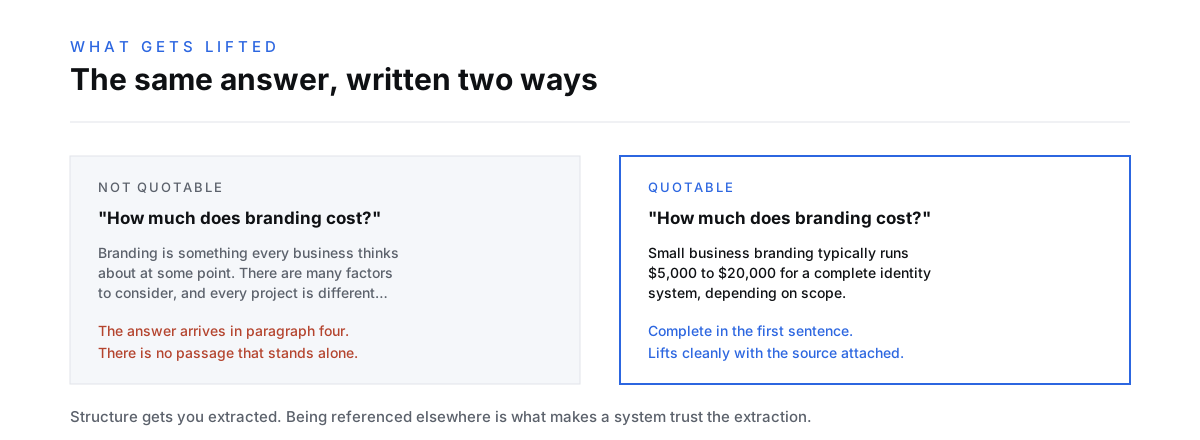
The single highest-leverage change is putting the answer immediately after the question.
If a heading asks something, the sentence beneath it should answer it completely, before any context or qualification. Everything else on the page can elaborate, but that first sentence has to stand alone, because standing alone is exactly what being quoted means.
Most business writing does the opposite. It builds context, establishes credibility, and arrives at the answer in paragraph four. That structure is unquotable: there is no passage that answers the question by itself.
Test it by reading only the first sentence under each heading. If those sentences form a useful summary of the page, you have written something extractable. If they read as introductions, you have not.
Structure for extraction
Beyond answer-first writing, a few structural habits make content substantially easier to quote.
Use headings that match real questions. A heading reading "Pricing" is a label. A heading reading "What does a brand identity cost" is a question a person asked, and it lets a system match the query to your passage directly.
Keep sections self-contained. A passage that depends on the previous three paragraphs cannot be lifted. Two to four hundred words that make sense alone is the useful unit.
Include a genuine FAQ section with complete answers in the first sentence of each. This format maps almost perfectly onto how questions get asked and answered.
Use plain lists and tables for comparisons. Structured information extracts cleanly, prose comparisons do not.
Add FAQ and Article structured data, generated from the visible content so the two cannot drift apart. It helps machines parse what you meant.
First sentence
The unit that gets quoted. If your answer arrives in paragraph four, there is nothing to lift
Be worth corroborating
This is the part that cannot be solved on your own website, and it is where most of the difference is made.
These systems favor sources that appear across the web rather than sources that assert things about themselves. Being mentioned in industry directories, quoted in publications, discussed in communities, and referenced by other sites all feed the impression that you are a real and known entity.
That means the off-site work matters as much as the writing. Being listed accurately in the directories that cover your field, contributing genuinely useful answers in communities where your industry congregates, and earning coverage from people who write about your sector are the mechanisms. None of them are quick, and all of them compound.
The evaluative queries make this concrete. Nobody ranks their own page for "best agency in a city". Those answers are assembled from directories, listicles, and community discussion, so the way to appear in them is to be present in those sources.
You cannot optimize your way into being cited. You can be the clearest answer on a subject, and be visible enough elsewhere that a machine believes you exist.
Publish something only you could publish
Original material is disproportionately cited, because a system summarizing a topic needs facts, and facts come from somewhere.
Original data is the strongest form. A survey of your clients, figures from your own work, a documented process with real numbers attached. If you are the source of a fact, anyone answering that question has to reference you.
Genuine expertise is the next best thing. Specific, experienced judgment about how something actually works, including the parts that are inconvenient. Content assembled from what already ranks contributes nothing new and gives no reason to cite it over its own sources.
This is also the defense against AI-generated competition. When producing average content costs nothing, average content is worth nothing. What remains scarce is knowing something because you did the work.
How to tell whether it is working
Measurement here is genuinely harder than traditional search, and pretending otherwise leads to bad decisions.
Ask the systems directly. Put the questions your customers ask into the major assistants and see what gets cited. It is manual and unscientific, and it is currently the most direct signal available. Repeat it monthly and record what changes.
Watch for traffic that arrives without a search query. Referrals from AI tools appear in analytics, though inconsistently and under various labels. The volume is usually small and the intent unusually high, because somebody who arrives after reading a summary about you has already been pre-qualified.
Track branded search volume. One of the clearest downstream effects of AI visibility is people searching for your name after encountering you in a summary. A rising branded trend without a corresponding campaign is a reasonable indicator.
Expect attribution to stay imperfect. A meaningful share of this influence will never appear cleanly in a report. Somebody reads a summary mentioning you, remembers the name, and arrives directly three weeks later. That is a real effect with no clean measurement, and building your judgment solely on what is trackable will systematically undervalue it.
What does not work
Keyword stuffing for AI. These systems process meaning rather than density, and stuffing degrades the readability that makes a passage quotable.
Publishing volume. More pages of the same average material does not increase citation likelihood. It dilutes.
Claiming authority. Saying you are a leading provider is not corroboration. What counts is other sources saying something about you.
Chasing every new AI platform separately. The fundamentals, clear answers and real reputation, apply across all of them. Optimizing separately for each is work that does not transfer.
For how this fits the wider content picture, how much content do you actually need to rank covers the structural approach, and how long does SEO take to work sets expectations on timing. Our approach is described under content creation.
What to do next
Take your most important page and read only the first sentence under each heading.
If those sentences do not answer their headings on their own, rewrite them so they do. It costs an afternoon, it improves the page for human readers as well, and it is the difference between content that ranks and content that gets quoted.
Frequently asked questions
How do I get my website cited by ChatGPT? Structure content so each heading is answered completely in the sentence beneath it, and build genuine presence elsewhere on the web. AI systems favor sources that answer cleanly and are corroborated by other sites.
What is the difference between SEO and AI search optimization? The fundamentals overlap heavily. The main difference is that AI systems extract passages rather than ranking pages, so self-contained answer-first sections matter more than they do for traditional search.
Does structured data help with AI Overviews? It helps machines parse your content accurately, particularly FAQ and Article markup. It is a supporting factor rather than a primary one, and it should be generated from visible content so the two cannot diverge.
Can I pay to appear in AI search results? No. There is no submission process or paid placement for organic citations. Visibility comes from being genuinely quotable and genuinely referenced elsewhere.
Why does my page rank well but never get cited? Usually because the answer is spread across several paragraphs rather than stated in one. Ranking rewards overall page quality; citation rewards a passage that stands alone.
Does original research really improve citation odds? Substantially. Systems summarizing a topic need facts, and facts have sources. If you are the origin of a figure, anything answering that question has to reference you.

Written by
Nick Kvistad
Principal Strategist
Put this to work
Reading about it is free. So is finding out what it would take for your business.
Tell us what you are building and we will tell you honestly what it needs, whether or not you hire us. 85% of our business comes from referrals, because the advice is worth passing on.