What Makes Brand Photography Worth the Money
Photography occupies more of your website than anything else. It is also the asset with the longest useful life.
In short
Photography is the largest visual element on almost every website, and the one visitors judge fastest. It is also the content with the longest useful life: good images carry a site, decks, social, and print for years.
Costed across everything it appears on and the years it lasts, it is usually the cheapest thing in a marketing budget. It rarely feels that way at the point of paying for it, which is why so many businesses run on stock imagery and wonder why they read as unproven.
Why it decides credibility
Visitors form an impression of a website almost immediately, and that impression is formed visually because reading takes longer than looking.
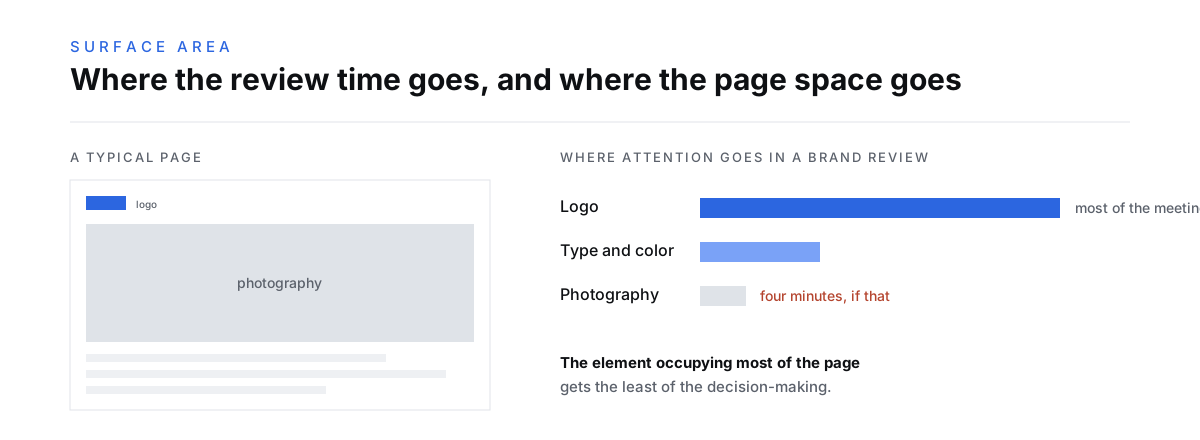
Photography is doing most of that work. Measure the proportion of a page occupied by images against the proportion occupied by the logo and the difference is stark. Yet identity projects routinely spend most of the budget on the mark and leave photography as an afterthought.
Stock imagery is the specific problem. People recognize it, often without being able to say why, and what it communicates is that there was nothing real to show. For a business selling craft or judgment, that is precisely the wrong signal.
What separates good from expensive
Cost and quality are only loosely related. The difference usually lies in three things.
Direction. Somebody decided what these images needed to communicate before the shoot. Without that, you get technically competent photographs that add nothing, because nobody defined what they were for.
Consistency. Images that share a treatment, palette, and mood read as one brand. A folder shot without a defined look produces pictures that fight each other when placed on the same page.
Specificity. Photographs of your actual people, space, and work. Generic images of generic people are stock with a bigger invoice.
A modest shoot with clear direction beats an expensive one without it, every time.
What service businesses should photograph
The common objection is that there is nothing to photograph. There is almost always more than assumed.
The people, properly. Not stiff headshots against a wall. People doing the work, in the space where it happens.
The process. Whatever the work actually looks like in progress: sketches, screens, materials, the mess before the result.
The environment. The studio, the workshop, the desk. Place is evidence that you are real and somewhere specific.
The outputs. Finished work, photographed well. For anything physical this is straightforward. For digital work, it means considered mockups and details rather than flat screenshots.
The details. Close crops of tools, materials, textures, hands working. These fill layouts, work as backgrounds and social assets, and carry a brand's feel more than wide shots do.
Years
The useful life of good photography. Costed across everything it appears on, it is usually the cheapest line in a marketing budget
Plan the shoot against where images will live
The most common waste is producing a folder of attractive images that fit nowhere.
Before the shoot, list the places images are needed and their requirements. A website hero needs wide framing with empty space for text. Social needs square and vertical crops. Decks need images that work behind type. Print needs resolution nobody thinks about until it is too late.
Shooting for one context and cropping into the others produces images that are slightly wrong everywhere. Shooting against a list produces a library that gets used.
Include the unglamorous requirements too: a horizontal team shot, a clean image for an email header, something that works as a plain background. These are the images you reach for constantly, and they are never on a mood board.
A shot list built from where the images will actually appear is worth more than another day of shooting. Most photography budgets are wasted before the camera comes out.
Sort out usage rights before the shoot
This is where businesses get caught, usually at the worst moment.
Photography is licensed, not automatically owned. Standard arrangements frequently cover organic use on your own channels and exclude paid advertising, third-party publication, or resale. Discovering that when you are about to run a campaign is a common and expensive surprise.
Agree in writing what you can do with the images, for how long, and in which territories. If you might advertise, say so now, because adding advertising rights later costs considerably more than including them initially.
Ask what you receive as well: edited images at what resolution, and whether raw files are included. Also confirm any releases needed for identifiable people, particularly clients or members of the public.
What to expect on the day
Knowing the shape of a shoot removes most of the anxiety, and the anxiety is what produces stiff photographs.
It takes longer than you think and produces less than you expect. A full day might yield thirty images you actually use. That is a good outcome, not a poor one. Volume is not the goal.
Your team will be uncomfortable at first. Everybody is. The first hour is largely spent getting past it, which is why the best images usually come later in the day once people have forgotten the camera is there.
Somebody has to make decisions. A shoot without a decision-maker present stalls constantly on small questions. Send someone who can answer them.
Real work photographs better than staged work. Where possible, shoot people doing something genuine rather than miming it. The difference is visible even when the viewer cannot articulate why.
Ask to review as you go. Checking images during the shoot means gaps get caught while the setup still exists, rather than discovered two weeks later when fixing them means booking another day.
Prepare the space beforehand too. Clear the clutter that will be distracting in frame, and consider what the light does in the room at different hours.
How often it needs redoing
Less often than people expect, which is what makes the economics work.
Good photography holds for two to four years for most businesses. Refresh sooner if your team changes substantially, you move premises, or the offering shifts enough that the images misrepresent it.
Rather than periodic complete reshoots, the more efficient pattern is one thorough foundational shoot and small top-ups as things change. That keeps the library coherent while avoiding a large cost every couple of years.
For where photography sits against other formats, blog, photo, or video sets out how to split a content budget. For how photography fits the wider identity, what you actually get in a brand identity system covers the components. Our approach is described under content creation, and finished work is in our portfolio.
What to do next
Open your website on a phone and look at the images without reading anything.
If they could belong to any business in your industry, that is the problem, and it is costing you credibility with every visitor before they read a single word. Real photographs of your actual work and people will do more for how you are perceived than another round of design.
Frequently asked questions
Is professional brand photography worth the cost? Usually yes, because it has the longest useful life of any content. Good images serve a website, decks, social, and print for two to four years, which makes the cost per use very low despite the upfront figure.
Can I just use stock photography? You can, and it costs credibility. Visitors recognize stock imagery and read it as a sign there was nothing real to show. Even modest photography of your actual people and work outperforms polished stock.
What should a service business photograph? People doing the work, the process in progress, the environment, finished outputs, and close details. Service businesses usually have far more to photograph than they assume.
How long does brand photography last? Two to four years for most businesses. Refresh sooner if the team changes substantially, you move premises, or the offering shifts enough that the images no longer represent it accurately.
Do I own the photographs I paid for? Not automatically. Photography is typically licensed, and standard terms often exclude paid advertising or third-party publication. Agree usage rights in writing before the shoot, including whether you may advertise with the images.
How do I get more value from one shoot? Plan against a list of where images will appear rather than what looks appealing. Different placements need different framing, so shooting for one context and cropping into others produces images that fit nowhere properly.
Written by
Nick Kvistad
Principal Strategist
Put this to work
Reading about it is free. So is finding out what it would take for your business.
Tell us what you are building and we will tell you honestly what it needs, whether or not you hire us. 85% of our business comes from referrals, because the advice is worth passing on.