How Long Does a Rebrand Take?
Four to eight weeks for most brand projects across the market (ours typically deliver in two to six), and the design is rarely what makes it longer. Here is where the time actually goes.
In short
Most brand projects run four to eight weeks from kickoff to final files. Larger businesses with more applications to cover run twelve to sixteen.
The design work is almost never what makes a project long. Discovery is fixed, design is predictable, and handover is quick. The variable is your side: how fast decisions come back, and whether they come back from one person or six.
If you need a date to plan around, the honest answer is that a studio can commit to its own turnaround and not to yours. The projects that finish on time are the ones where somebody on the client side has the authority to say yes.
The short answer, by size of business
A small service business replacing a dated identity: four to six weeks.
A growing company with a real product range, several audiences, and print as well as digital: six to eight weeks.
A business with multiple locations, sub-brands, or a sales team that needs its own materials: twelve to sixteen weeks, and worth resisting anyone who quotes less.
Those ranges assume the work starts once and finishes once. They do not include the two months some companies spend deciding whether to start, which is often the longest phase of all.
What happens in each phase
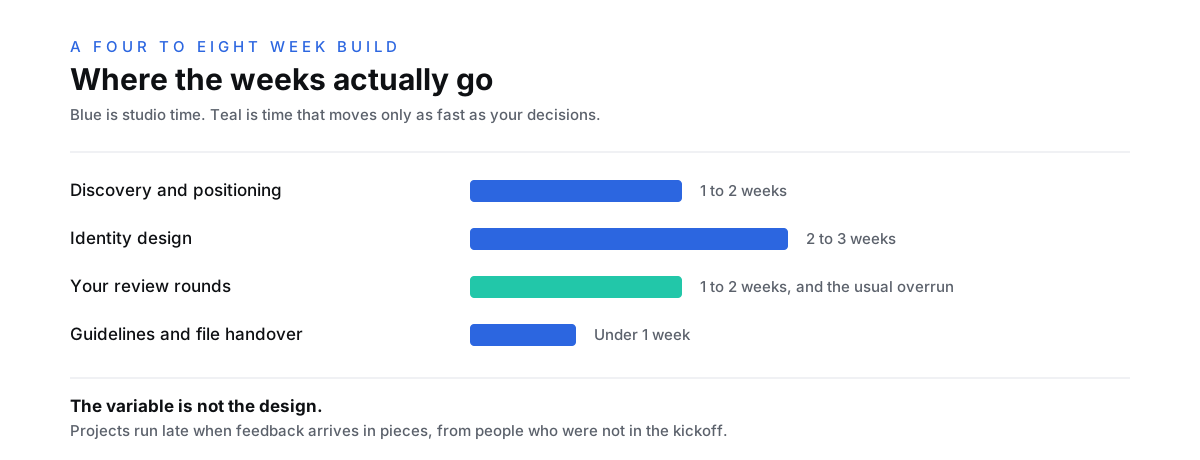
Discovery and positioning, one to two weeks. Interviews, a look at how competitors sound, and a decision about what you are actually claiming. This phase produces a written position, not a picture. Skipping it is how you end up with a logo nobody can defend six months later.
Identity design, two to three weeks. The logo system, type, color, and the way they behave together across the places you show up. Studios move fast here because it is the part they control entirely.
Your review rounds, one to two weeks. Two rounds is normal. This is where projects gain or lose their schedule.
Guidelines and handover, under a week. The rules document, organized source files, and exports for every context you will need.
Two rounds
The number of feedback rounds most brand projects budget for, and the number a scattered approval process turns into five
The five things that quietly add a month
Feedback arriving in pieces. Three notes on Tuesday, two more on Thursday, and a fresh opinion the following week is not one round. It is three, and it gets billed and scheduled like three.
A decision maker who was not in the kickoff. The most expensive sentence in this work is "let me just run it past someone". If a person can veto the result, they belong in the first meeting, not the last.
Discovering the name is the problem halfway through. This happens when discovery was rushed. A name change midway does not extend the project, it restarts it.
No photography. A brand system is designed to hold real images. If those images do not exist yet, either the shoot gets scheduled into the middle of the project or the guidelines ship describing photography nobody has taken.
Asking for options instead of a recommendation. Three directions feels like more value and buys you a committee argument. One considered direction with the reasoning attached moves faster and usually lands better.
A studio can promise its own turnaround. It cannot promise yours. Every brand project that ran long ran long in the gaps between rounds, not inside them.
What you can do to make it faster
Name one decision maker before anything starts. Not a committee, not a consensus, one person who can approve on behalf of the business.
Say what you dislike, not what to change. "This feels corporate and we are not" is useful. "Make the blue darker" skips the reasoning and buys you a version you like slightly more and still cannot explain.
Gather what already exists before kickoff: the files you have, the places the brand appears, anything printed, and every login for the accounts where the brand lives. Chasing a logo file from a designer who left in 2021 is a genuinely common two-week delay.
Book the photography early or accept stock in the guidelines. Deciding this in week five is what turns a six-week project into a nine-week one.
When a longer timeline is the right answer
Speed is not always the goal. Three situations genuinely deserve more time.
If the business is mid-change, waiting until the strategy settles is cheaper than branding a moving target and paying again next year. Our post on whether you need a rebrand or a refresh covers how to tell which situation you are in.
If the brand is going onto packaging, signage, or vehicles, physical production has lead times that do not care about your launch date.
If several people genuinely need to agree, build the disagreement into the schedule rather than pretending it will not happen. Two extra weeks planned is cheaper than two unplanned, and far cheaper than a decision reopened after handover.
What "finished" actually means
A brand project ending and a brand being live are not the same date, and confusing them is why some launches feel flat.
At handover you should receive the logo system in every format you will realistically need, the type and color specifications, the guidelines document, and organized editable source files. If a studio hands over exports only, the project is not finished, it is hostage. That is worth confirming in writing before you start rather than discovering at the end.
Then there is rollout, which is yours and which nobody schedules. The website, the email signatures, the social profiles, the invoice template, the van, the sign, the trade show banner, the letterhead nobody has printed since 2019. For a small service business this is a week of unglamorous swapping. For a company with physical assets it can run for months, and doing it gradually is fine as long as the customer-facing surfaces change together.
The one rule worth following: change everything a customer sees inside the same two weeks. A half-applied brand reads as an unfinished business, which is the opposite of what you paid for. Internal documents can catch up later.
What to ask before you sign anything
Ask how many rounds are included and what happens after them. Ask who does the work and whether that person is in the meeting. Ask what you receive at handover, specifically whether you get editable source files or exports only. Ask what makes their projects run late, because a studio that has never thought about it has not run many. Ask what they need from you and when, and be suspicious of anyone who says nothing, since that answer usually arrives as a delay later.
How to choose a branding agency goes deeper on the evaluation itself, and what branding costs covers the money side of the same conversation.
What to do next
If you have a date you are working back from, a launch, a funding round, a trade show, count backwards eight weeks and add two for the review rounds nobody plans for. If that lands in the past, the honest move is to scope a smaller piece of work that ships on time rather than a full system that arrives late.
See how we run branding projects in Santa Barbara, including the review cadence and what you get at handover.
Frequently asked questions
How long does a rebrand take for a small business? Four to six weeks is typical for a small service business replacing a dated identity, assuming one decision maker and two rounds of feedback. Larger businesses with more applications to cover run six to eight weeks or longer.
Why do brand projects run over schedule? Almost always on the client side, and almost always for the same reason: feedback arrives in pieces, or a decision maker who was not in the kickoff appears at the end. The design phases themselves are predictable because the studio controls them.
Can a rebrand be done in a week? A logo can. A brand cannot. What gets delivered in a week is one asset with no strategy behind it and no system around it, which is the thing most businesses end up replacing within two years.
How long should discovery take? One to two weeks for most businesses. Its output is a written position you could defend in a meeting, not a mood board. If discovery produces only pictures, it has not happened yet.
Do I need photography before we start? Not before, but decide early. A brand system is built to hold real images, and choosing in week five whether you are shooting or using stock is one of the most common causes of a project running a month late.
How long before a new brand affects the business? Recognition rebuilds over months, not weeks. Expect the internal effects immediately, because your team finally describes the business the same way, and the external effects across the following two quarters.

Written by
Nick Kvistad
Principal Strategist
Put this to work
Reading about it is free. So is finding out what it would take for your business.
Tell us what you are building and we will tell you honestly what it needs, whether or not you hire us. 85% of our business comes from referrals, because the advice is worth passing on.