Rebrand or Refresh: How to Tell Which One You Need
A refresh updates how you look. A rebrand changes what you mean. Five questions that settle which one you actually need.
In short
A refresh updates how you look while keeping everything people already recognize. A rebrand changes what you mean, and recognition resets with it.
Most businesses that think they need a rebrand need a refresh. The tell is simple: if customers still find you and just think you look dated, that is a refresh. If customers find you and misunderstand what you now sell, that is a rebrand.
Getting this wrong is expensive in both directions. Rebranding when you needed a refresh throws away recognition you paid years to build. Refreshing when you needed a rebrand leaves the actual problem untouched and you pay again in eighteen months.
The difference in one line
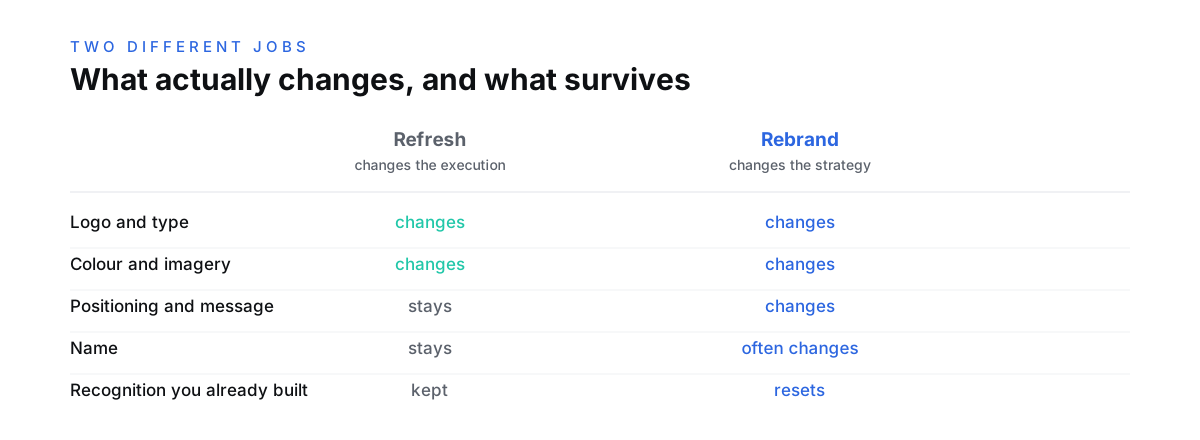
A refresh changes the execution. A rebrand changes the strategy.
Refresh work touches the logo, type, color, photography, and layout. The name stays. The positioning stays. Someone who knew you last year still recognizes you this year, they just think you look sharper.
Rebrand work starts one level up: who you are for, what you claim, why anyone should pick you. The visual system changes because the meaning changed, not the other way round. A rebrand that only changes the logo is a refresh wearing a bigger invoice.
Five questions that settle it
Answer honestly. Three or more "yes" answers on the rebrand side means the problem is not cosmetic.
Has what you sell materially changed? Not new features. A different core offer, a different buyer, or a different price bracket. If the business has moved and the brand has not, no amount of new typography closes that gap.
Does the name actively work against you? A name that boxes you into one product, one city, or one era is a strategy problem. A name that is merely plain is not.
Are you losing deals you should win, for reasons nobody can name? When prospects say you seem "small" or "not quite right" without specifics, that is usually positioning, not design.
Did you inherit the brand from a version of the company that no longer exists? Post-merger, post-pivot, post-founder. Identity built for a company that is gone will keep describing that company.
Would your best customer be confused by your own homepage? If the people who love you cannot explain what you do from your own words, the meaning is broken.
If none of that applies and you simply look older than your competitors, you want a refresh. That is a real answer, not a consolation prize.
What a refresh actually gets you
Refresh scope varies, but the useful version keeps the equity and fixes the execution: a tightened logo rather than a new one, an expanded color and type system, real photography direction, and rules for applying it consistently.
The point is compounding. Every asset you produce afterwards reinforces the same impression instead of pulling in a slightly different direction. You can see what a finished system looks like across our brand work, and we have listed everything a complete identity system contains if you want to check a refresh quote against it.
A refresh is not a smaller rebrand. It is a different job with a different goal: keep what people already know about you and remove everything that undercuts it.
What a rebrand costs you beyond money
The invoice is the smallest part.
You spend recognition. Every person who knew your old mark has to learn the new one, and some fraction never makes the trip. You spend search equity, because a name change means new URLs, new citations, and a period where both versions compete. And you spend internal time, because every template, signature, deck, and profile has to be replaced by someone.
None of that argues against rebranding when it is genuinely warranted. It argues against rebranding as a solution to boredom, which is the most common actual reason it happens.
18 months
How quickly a brand bought on price tends to need replacing, which is what turns a cheap identity into an expensive one
What each one costs, and how long it takes
Refresh and rebrand are priced like the different jobs they are, which is exactly why you decide first and quote second. Comparing a refresh quote against a rebrand quote tells you nothing except that one number is bigger.
A refresh typically runs a fraction of full identity work, because the strategy layer is inherited rather than rebuilt. The hours concentrate in design refinement and system building: tightening the mark, expanding type and color, setting the rules for applying them. Timelines are short, usually 3 to 6 weeks, because there are fewer decisions and fewer stakeholders inside them.
A rebrand is priced as strategy plus identity. Across the industry that lands in the $5,000 to $20,000 band most small businesses pay for complete identity work, with full-service programs running well past that; we have broken down what branding actually costs separately. Expect 4 to 8 weeks for a focused identity, and 10 to 16 when strategy research and a website ship together. Those are market norms; our own programs typically deliver in 2 to 6 weeks.
Then add the line item that surprises people more than the design fee: rollout. Reprinting, re-signing, re-shooting, and updating every profile, template, and document the old mark touched. For a physical business the rollout can cost as much as the rebrand itself. Budget it up front, or the new identity launches halfway and lives beside the old one for a year, which reads worse than either version on its own.
The version nobody offers you
There is a third answer that gets skipped because it is harder to sell: fix the words, keep the visuals.
A surprising share of "our brand is not working" problems are message problems. The identity is fine. The homepage headline is vague, the services are described in the company's language rather than the customer's, and the proof is buried. That is a copy and structure project, and it costs a fraction of either option above.
Before you commission new visuals, ask whether a stranger could read your homepage and say who you are for and why you win. If not, start there.
What to bring to the first conversation
Whichever answer you land on, the project goes better when you arrive with evidence instead of adjectives. Five things are worth assembling before you talk to anyone.
The numbers behind the feeling. Inquiry trends, close rates, where deals stall. "We look dated" is an opinion; "we lose to the same two competitors at the shortlist stage" is a brief.
What customers actually say. Reviews, sales-call phrases, the words people use to describe you. If those words do not match the words on your site, that gap is the project.
Everything carrying the current brand. Site, signage, packaging, decks, profiles, vehicles if you have them. The length of that list is the size of the rollout, and it changes the budget conversation completely.
What must not change. Most businesses have equity worth protecting somewhere: a name, a color, a mark customers genuinely recognize. Name it before someone redesigns it away.
A decision-maker. Identity projects run long and die in committee. One person owns the final call, or every timeline above doubles.
What to do next
Decide which problem you actually have before you get quotes, because the two jobs are priced completely differently and comparing them is meaningless. Then ask any agency you talk to which one they think you need, and why. An agency that recommends a rebrand before understanding your positioning is selling scope, not judgment. It is how we open every branding engagement: diagnosis first, scope second.
Frequently asked questions
What is the difference between a rebrand and a brand refresh? A refresh updates the visual execution while keeping your name, positioning, and recognition intact. A rebrand changes the underlying strategy, and often the name, so the visual system changes because the meaning changed.
How do I know if I need a rebrand? You likely need a rebrand if what you sell has materially changed, your name works against you, or your best customers cannot explain what you do. If customers still find and understand you and simply think you look dated, you need a refresh.
How often should a brand be refreshed? Most brands benefit from a refresh every five to seven years, and sooner if the business has grown into a different market. There is no fixed schedule, and refreshing on a timer rather than a reason is how brands lose consistency.
Will rebranding hurt my SEO? It can, particularly if the domain or URLs change. The damage is manageable with proper 301 redirects and updated citations, but expect a dip and a recovery period rather than a clean handover. Plan for it rather than discovering it.
Is a logo redesign the same as a refresh? No. A logo redesign changes one asset. A refresh updates the whole system that asset sits in, including type, color, imagery, and the rules for using them, which is what makes the result hold together.
Can I refresh now and rebrand later? Yes, and it is often the right sequence when the business is still changing. Refresh to stop the bleeding, wait until the strategy settles, then rebrand once with a clear brief rather than twice with guesses.

Written by
Nick Kvistad
Principal Strategist
Put this to work
Reading about it is free. So is finding out what it would take for your business.
Tell us what you are building and we will tell you honestly what it needs, whether or not you hire us. 85% of our business comes from referrals, because the advice is worth passing on.